
You know that moment when everything inside you feels heavy, sharp, or chaotic — and your first instinct is to reach for cannabis just to take the edge off? Yeah. That moment. It’s more common than you think.
For millions, weed becomes an emotional dimmer switch — a quick escape hatch when things feel “too much.” But when you stop, all those suppressed emotions come rushing back like they’ve been waiting at your door for years. The challenge isn’t just quitting weed. It’s learning how to feel again — without drowning, running, or numbing.
Understanding Emotions
Here’s the truth most of us didn’t learn growing up: emotions are signals, not threats. They’re your internal dashboard, telling you what matters.
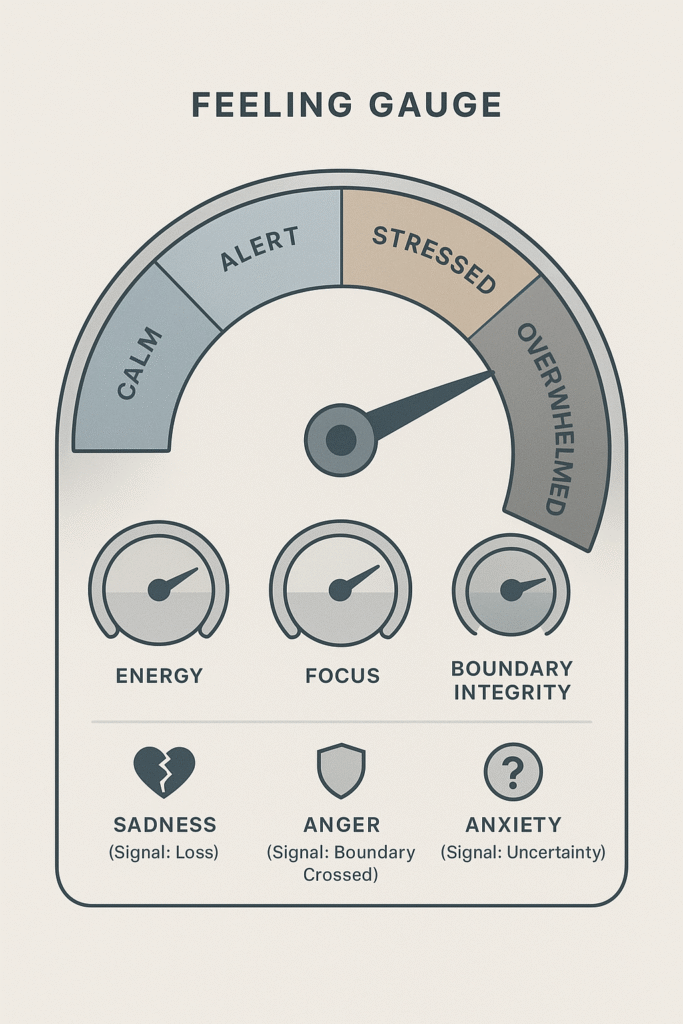
Anger signals a boundary violation. Fear signals a potential threat. Sadness signals loss or unmet needs. Anxiety signals uncertainty.
The problem? Avoiding or numbing emotions — with weed, scrolling, food, work, or anything else — doesn’t make them disappear. They wait. Over time, they get louder, sharper, and more confusing. Using cannabis may provide a temporary shortcut, but it prevents your brain from building the coping skills needed to respond effectively. And it often leads to addiction.
Why Emotions Feel “Too Loud” After You Quit Cannabis
When you remove the filter, the volume is suddenly maxed out. This is a normal part of withdrawal, driven by two main factors:
- Dopamine Recalibration: THC flooded your brain’s reward system. Without it, your brain experiences temporary flatness, called anhedonia — a sign it’s resetting, not failing.
- Lower Emotional Tolerance: If you’ve relied on weed for emotional relief, your brain hasn’t built the natural muscle memory for regulation. The feelings aren’t worse — your tolerance for them is lower.
Primary vs Secondary Emotions
Start your emotional inventory by identifying primary emotions (your raw feelings, e.g., sadness after a break-up) and secondary emotions (your reaction, e.g., shame or anger about being sad). Many in recovery expend all their energy fighting secondary emotions. Recognizing the primary feeling is the true first step.
Unhealthy coping isn’t a moral failing — it’s a pattern. A set of reflexive habits that exchange long-term clarity for short-term comfort. In the moment, these strategies feel effective:
- using weed to mute anxiety, boredom, or sadness
- pushing emotions down rather than letting them move
- doom-scrolling to numb overstimulation
- isolating or slipping into procrastination loops
- overeating, overworking, or overfilling your bandwidth
But these habits borrow relief from the future. Over time, they create emotional dependence, raise your tolerance for escapism, intensify anxiety, disrupt natural sleep rhythms, and increase the likelihood of relapse.
Healthy coping looks far less dramatic. It’s quiet. Steady. Often unremarkable. But it changes everything. Consistent emotional skills build tolerance, resilience, and the capacity to regulate yourself without reaching for a shortcut. With practice, they lower relapse risk and restore something essential: self-trust.
In therapeutic settings, these approaches are grounded in well-established frameworks — DBT’s emotion regulation tools, CBT’s cognitive and behavioral strategies, neuroscience’s understanding of the stress response, and mindfulness practices that strengthen awareness and calm the nervous system.
When you choose healthy coping, you’re not choosing the harder path. You’re choosing the one that actually works.
Why We Use Cannabis as an Emotional Filter
Cannabis isn’t just “fun” for most people. It often becomes a tool — sometimes unconsciously — for numbing, soothing, or muting unwanted feelings. You might use it to:
- Quiet racing thoughts
- Escape stress
- Soften emotional overwhelm
- Take the edge off loneliness
- Break tension or boredom
- Shut down intrusive feelings
The issue isn’t the feeling itself. The issue is not knowing how to handle it without leaning on cannabis. Removing the filter can feel intense — but it’s also the beginning of true emotional mastery.
Processing Negative Emotions
Many of us were taught to “stay strong” or “push through” discomfort, conditioning the brain to see negative feelings as dangerous. But emotions are signals — not threats. Avoiding them amplifies discomfort, strengthens triggers, and keeps you reactive instead of intentional.
Learning to work with your feelings, instead of numbing them, naturally reduces dependence on cannabis.
Why It Feels Hard at First
If your brain has relied on cannabis for emotional regulation, stepping into sobriety can feel overwhelming:
- Reduced tolerance for discomfort
- Intensified feelings
- Difficulty identifying emotions
- Feeling overstimulated, irritable, or “raw”
- Confusing stress for danger
These aren’t failures — they’re signs your emotional system is waking up. It’s like stepping into bright sunlight after leaving a dim theater. Your job isn’t to shut down the feelings. It’s to listen to what they’re telling you.
The Emotional Inventory Technique
This can be your core tool for processing emotions without cannabis.
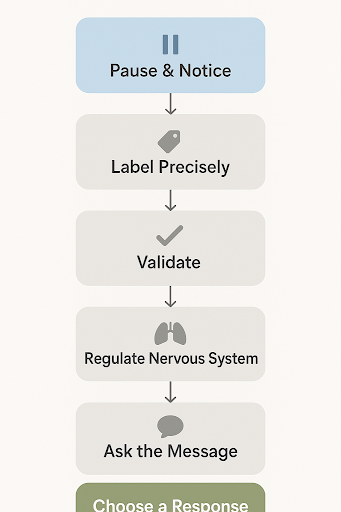
The Emotional Inventory is a 6-step process designed to help you understand, regulate, and respond to your emotions without avoidance.
Each step builds emotional capacity, lowers impulsive reactions, and trains your nervous system to stay grounded even during discomfort.
STEP 1 — Pause & Notice the Activation (“Name the Alarm”)
Before reacting, using, or numbing the feeling—pause.
Ask yourself:
“What is happening inside me right now?”
Then identify the activation signal:
- tight chest
- racing thoughts
- heaviness
- anger rising
- buzzing anxiety
- urge to escape
- impulse to use cannabis
You’re not trying to fix it. You’re simply acknowledging: “I’m activated.” This simple recognition gives you control of the wheel again.
STEP 2 — Label the Emotion with Precision
Most people use broad terms:
“I’m stressed.”
“I’m overwhelmed.”
“I’m just off.”
But stress is a category—not a feeling. The key is to use exact language, like:
- frustration
- disappointment
- fear
- embarrassment
- loneliness
- insecurity
- sadness
- pressure
- resentment
Why it works:
Naming the emotion reduces its intensity by giving your brain clarity instead of chaos.
A helpful prompt:
“What is the primary feeling, and what is the secondary feeling beneath it?”
Often anger is the shield; hurt is the truth.
STEP 3 — Validate the Emotion (“Of Course I Feel This Way”)
Validation does not mean agreement.
It means acknowledging the emotion is understandable.
Example validations:
- “Of course I’m anxious—I’m dealing with uncertainty.”
- “It makes sense that I feel lonely—I’ve been disconnected lately.”
- “No wonder I’m overwhelmed—this is a lot.”
Validation melts resistance. And when resistance drops, processing becomes possible.
STEP 4 — Engage the Nervous System (Regulate Before You Reflect)
You cannot think clearly when your nervous system is flooded.
Your goal is to regulate first, reflect second.
Effective regulation tools:
- slow breathing (4-6 pattern)
- grounding exercises (5-4-3-2-1)
- cold water on the wrists
- physical movement
- stepping outside for fresh air
- stretching or shaking out tension
These lower physiological arousals so your brain can come back online.
STEP 5 — Ask the Emotion What It’s Trying to Tell You
Every emotion carries a message.
Ask:
“What is this feeling pointing to?”
Examples:
- Fear → “I need reassurance or clarity.”
- Anger → “A boundary was crossed.”
- Sadness → “Something meaningful was lost.”
- Anxiety → “Something feels uncertain or unprepared.”
- Shame → “I’m scared of being judged or disconnected.”
- Loneliness → “I need connection or support.”
When you interpret the message, the emotion stops feeling like an enemy and starts acting like a guide.
STEP 6 — Choose a Response (Not a Reaction)
Now that you’re grounded, clear, and aware—you can choose.
Your options might be:
- setting a boundary
- communicating your needs
- resting
- journaling
- problem-solving
- changing environments
- reaching out to someone
- taking action on something you’ve been avoiding
Your goal is not perfection—it’s intention. When you respond instead of react, you build emotional trust with yourself.
What Happens When You Practice Emotional Inventory Consistently
After 1–2 weeks:
- feelings stop feeling “too big”
- anxiety becomes more manageable
- cravings to use cannabis during stress decrease
After 2–4 weeks:
- emotional clarity increases
- triggers become easier to identify
- you feel less reactive and more grounded
After 6–8 weeks:
- your emotional tolerance strengthens
- cannabis use becomes less compulsive
- you experience more inner stability
- you rely on tools instead of numbing
This is how real emotional resilience is built.
When Cannabis Is No Longer the Default Filter
The goal isn’t to shame yourself for using cannabis. The goal is to stop depending on it to manage emotional experiences.
When you build emotional processing skills, cannabis shifts from a coping mechanism to a conscious choice—if you choose it at all.
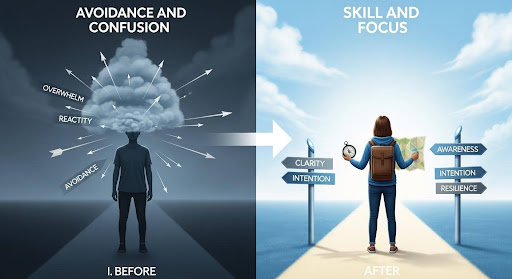
You move from:
- avoidance → awareness
- overwhelm → clarity
- shutdown → expression
- autopilot → intention
- emotional dependency → emotional intelligence
And this transformation stays with you for life.
Final Reflection
Learning how to process emotions without cannabis isn’t about willpower—it’s about building a relationship with your inner world that’s based on trust, not escape.
You don’t need to eliminate negative emotions.
You need to understand them, listen to them, and allow them to move through you instead of getting stuck inside you.
Your feelings are not the problem.
Your feelings are the map.
And you are learning how to read it with confidence.
FAQ
How do you process negative emotions without using cannabis?
Start by naming the emotion, locating it in the body, and identifying the trigger. Use grounding techniques, micro-actions, or cognitive reframing to regulate the feeling instead of numbing it.
Why do feelings get worse after quitting weed?
Your brain is recalibrating dopamine levels, and your emotional tolerance is temporarily lower. It’s a normal withdrawal phase and typically improves within weeks.
What are healthy coping skills without cannabis?
Tools like grounding exercises, journaling, micro-steps, social support, and cognitive reframing help regulate emotions naturally and build long-term resilience.
How can I manage negative feelings during withdrawal?
Use a structured routine, hydration, movement, and grounding techniques. Track your emotions in an app like Grounded to see patterns and triggers.
Why do I feel emotionally numb after quitting cannabis?
This is usually temporary anhedonia caused by dopamine recalibration. Pleasure gradually returns as the brain rebalances.
How long does emotional instability last after quitting weed?
Most people see improvement within 2–6 weeks, though some symptoms may linger during dopamine recovery. Consistent routines and emotional tools speed up stabilization.
References
- https://www.cdc.gov/cannabis/data-research/facts-stats/index.html
- https://www.csueastbay.edu/shcs/files/docs/counseling-group-handouts/at9—emotions.pdf
- https://adai.uw.edu/pubs/pdf/2016youthtxsudmh_brief.pdf
- https://www.researchgate.net/publication/312410843_Chapter_109_Cognitive_Behavioral_Therapy_in_Cannabis_Use_Disorder
- https://www.ncbi.nlm.nih.gov/books/NBK424849/#:~:text
- https://www.healthline.com/health/grounding-techniques
0 Comments