
The calendar is turning, and as 2025 winds down, that familiar question surfaces: “Can I finally make 2026 the year I get my life back?” Many of you are coming into the New Year having tried to quit before, only to have the resolve fade by February. That’s okay. We know the challenge isn’t just getting through the first 30 days. The core insight here is that successfully quitting cannabis isn’t a detox—it’s a year-long process of behavioral and identity transformation.
This is your realistic plan to quit weed, designed not for a quick fix, but for long-term freedom. We’ll show you exactly how to quit weed step by step, using Grounded as the companion that tracks your progress and keeps your motivation anchored well into Phase 3.
Why Most “Quit Weed” Plans Fail After January
Most New Year efforts, or a simple New Year resolution quit weed, focus on the immediate discomfort of withdrawal. People get bogged down in the detox phase, but neglect to plan for the life that comes after. When the initial rush of motivation subsides, the old routines, boredom, and stress triggers are still waiting. This is when the hard work of breaking a cannabis habit truly begins.
The science confirms that motivation wanes, but habits remain, causing a crash after the first month. Our solution is a quitting weed, a realistic 30-day plan embedded in a comprehensive, year-long strategy that aligns your internal progress with your external, quarterly goals.

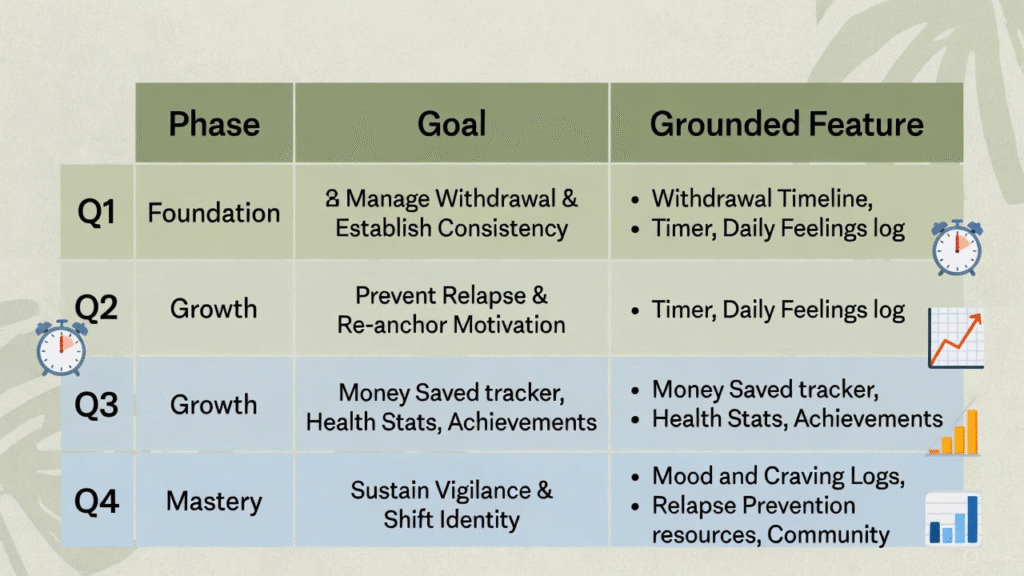
Phase 1 — Foundation & Launch (Q1: Jan–Mar 2026)
This is the quarter for preparation, survival, and establishing the foundational structure that will carry you through the year.
Before You Quit (Late Dec–Early Jan)
Before Day 1, you need clarity. Don’t start until you’ve clearly articulated your personal “why.” Is it better focus? Financial freedom? Addressing the anxiety and irritability that follow use?
- Choose Your Path: Will you aim for complete abstinence (how to quit weed for good) or a long Tolerance Break (T-break)? Both are valid acts of self-control.
- Pick Your Method: Decide if you’re going cold turkey or tapering gradually. The latter may ease initial symptoms, but requires exceptional discipline.
- Tool Up: Download and set up Grounded. Log your last use, select your goal, and review the day-by-day quitting weed timeline in the Health Stats section. Seeing the typical withdrawal curve helps manage expectations.
Set up support early. Download the Grounded app today (it’s free to start) and play around with the timer, mood logger, and savings counter. Seeing your streak from Day 1 makes everything feel more real. Check out our 7-day detox challenge for a gentle kickoff if you want structure.
The First 90 Days (Withdrawal → Stability)
This phase is about execution. Survival is the goal for the first two weeks. But building sustainable routines is the ultimate goal.
- Weeks 1–2: Survival:
Expect peak weed withdrawal symptoms like insomnia, vivid dreams, and changes in appetite. Don’t fight it; navigate it. Hydration, light exercise, and eating small, healthy meals are crucial. Use the Grounded Symptom Tracker to monitor your body’s recovery and reassure yourself that what you feel is normal.
- Weeks 3–8: Routine Replacement:
The physical symptoms fade, but the psychological pull remains. This is where you replace the old rituals. What do you do instead of smoking when you get home? Engage with the Daily Feelings log in Grounded to identify your common triggers (boredom, stress) and actively replace the cannabis habit with a healthy one.
- Month 3: Psychological Habit Work:
You’re reaching long-term recovery from cannabis. Focus on what the money saved in the app could buy. Use the Achievements section to see your progress and reinforce the belief that you are making a meaningful change.
Phase 2 — Reinforcement & Growth (Q2–Q3: Apr–Sep 2026)
This middle section is often where people fail. The “fresh start” feeling is gone, and the daily grind makes complacency a real danger.
Avoiding the Mid-Year Relapse Trap
By spring, a dangerous sense of “mission accomplished” can set in. This complacency is the biggest threat to staying sober from weed after the New Year. You might think, “I’ve got this under control—what’s one joint?” This “just one” thinking is the most common relapse prevention for marijuana challenge.
Combat this by re-anchoring yourself in data, not memory. Open your Grounded app. Look at the money saved, the days stacked up, the achievements earned. This tangible record is your armor against the distorted thinking that “one time won’t hurt.” Relapse prevention is about using your past success as your primary motivator for the future
Building a Weed-Free Lifestyle
This is the shift from quitting to living. You are actively creating a new identity: someone who doesn’t rely on weed.
- Identity Shift: Change your internal narrative. Focus on the gains: clarity, presence, and consistent energy. This improved focus often allows users to “supercharge their careers” or pursue goals only achievable when fully present.
- Social Navigation: If you are asking, “How to quit weed when all my friends still smoke,” you must set clear boundaries. Have exit strategies planned for social events and use supportive friends (non-users) as your lifeline.
- New Routines: Invest the time and money you’ve reclaimed into rewarding, healthy activities. Start that hobby you’ve always put off. This helps fill the “anhedonia gap” (the feeling that nothing is fun) until your natural dopamine regulation returns.
Phase 3 — Mastery & Maintenance (Q4: Oct–Dec 2026)
You’ve made it through the year! This quarter is about cementing your success and practicing effective relapse prevention.
Handling Holidays, Stress & Social Pressure
The final months of the year, with holidays and end-of-year stress, are a high-risk time. You need a defensive game plan for staying sober from weed after the New Year.
- Scripts: Have a prepared statement ready for social pressure (“No thanks, I’m taking a break this year”).
- Pre-commitment: Plan. Know exactly what you will drink or do at parties before you arrive.
- Exit Strategies: Permit yourself to leave any event or situation where you feel your sobriety is threatened. Your long-term recovery from cannabis is more important than politeness.
One-Year Reflection & Future Planning
Congratulations, you are approaching the anniversary of your quit weed 2026 resolution. Take a moment to look back at the Day-by-Day Quitting Weed Timeline and see how far you’ve come. Celebrate the milestones tracked by Grounded’s Achievements system.
The focus shifts from “how do I quit” to “how do I thrive.” This is about transitioning from the mindset of quitting to simply living cannabis-free. Set new, ambitious goals for 2027 that reflect the clarity and vitality you’ve regained.
How the Grounded App Supports Every Phase
Grounded is the central pillar of this yearlong plan, providing the data and structure you need for self-guided behavioral change.
Grounded’s support features normalize both Tolerance Breaks and full quitting, reminding you that control is the ultimate goal.
Start 2026 with a plan—not just a promise.
FAQ
Q: How do I quit weed if my partner or friends still smoke?
Open communication is key. Share your goals and ask for their support. Leverage the Grounded community as a support group for quitting weed from people who understand.
Q: What if I slip up and smoke?
A slip is a stumble, not a failure. Use the Grounded app to reset your timer immediately. Analyze what triggered the slip in your journal—this is crucial data for your relapse prevention strategy.
Q: Is it better to quit weed cold turkey or slowly cut down?
Neither is “right” or “wrong.” Try what matches your style—many mix both. Cold turkey resets faster but can hit harder early on. Tapering eases symptoms but needs consistency.
Q: How long do cravings last after quitting marijuana?
Intense cannabis cravings often peak in the first two weeks but can surface intermittently for months. Tracking them in Grounded helps you see them diminish over your long-term recovery from cannabis.
Q: Is taking a tolerance break still a success?
Absolutely. Completing a planned tolerance break is a powerful demonstration of self-control and can be a transformative step.
One Year Can Change Everything
Deciding to quit weed is one of the most significant investments you can make in your future self. 2026 offers a powerful, clean slate. This guide provides a realistic plan to start and the framework to continue. Let this be your year.
0 Comments