
If you’ve quit weed—or you’re thinking about it—you’ve probably read a lot about sleep problems, vivid dreams, appetite changes, or irritability. What almost nobody talks about is sex.
Changes in sex drive, intimacy, and emotional connection are surprisingly common. People often find themselves asking questions they didn’t expect: Why do I feel less interested in sex? Why does intimacy feel different? Is this permanent? When relationships are involved, those questions can feel even heavier.
If this is happening to you, it doesn’t mean something is “wrong.” It means your body and brain are recalibrating. In this article, we’ll break down what’s actually going on with weed and libido, how marijuana and relationships can shift during this transition, and how to navigate it without panic or pressure. This is exactly the kind of long-view self-awareness that tools like Grounded are designed to support.
The Science Behind Sex Drive and Cannabis: It’s Complicated
Cannabis has a complicated relationship with sex. For some people, especially early on, it feels like an enhancer. For others—particularly with long-term or heavy use—it quietly becomes a disruptor.
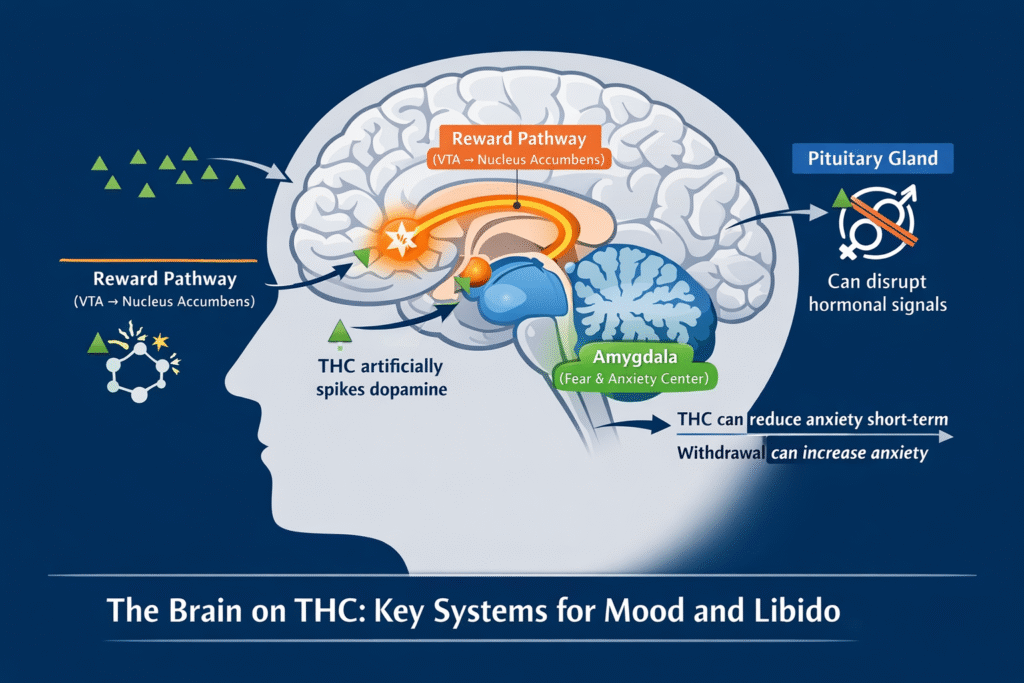
In the short term, THC can reduce anxiety, increase sensory awareness, and lower inhibitions. That’s why many people report better or more intense sex while high. A Vice feature explored how weed can act as a shortcut to relaxation and presence during intimacy, especially for people who struggle with stress or performance anxiety.
The problem is what happens over time. Chronic cannabis use interacts with the endocannabinoid system, which plays a role in arousal, hormone regulation, and emotional bonding. According to clinical breakdowns from Allo Health and Healthline, long-term use has been associated with cannabis and sexual dysfunction, including weed erectile dysfunction, reduced desire, and inconsistent arousal. This is where questions like does weed cause ED or does weed lower sex drive start to appear.
There’s also the dopamine piece. THC repeatedly spikes dopamine, the brain’s motivation and reward chemical. Over time, the brain compensates by reducing its baseline sensitivity. Weedless.org explains that when this happens, everyday pleasures—including sex—can feel muted without the drug. That’s why stopping cannabis can temporarily feel like the volume has been turned down on desire.
This biological setup explains why quitting doesn’t instantly restore balance. It initiates a reset.
What to Expect After You Quit: Common Phases
Quitting is a phased process. Your sex drive will reflect that journey. When you understand this timeline for libido recovery after stopping marijuana, it becomes easier to manage expectations.
The Early Phase (Weeks 1-4): Recalibration and Fluctuation
During the initial detox, your body focuses all its energy on restoring chemical balance. This is why you might experience weed withdrawal seeming to kill sex drive.
- Low Libido: The initial dip is often intense. You may experience anxiety and low libido during marijuana withdrawal simultaneously, as the brain struggles to regulate mood and pleasure.
- The Dopamine Dip: The temporary low libido after quitting weed is a normal part of the process as the body waits for its natural dopamine receptors to reawaken.
- Mood Swings: Emotional volatility is common. But it is a temporary side effect of withdrawal, not a permanent change.
- The Surprise: Interestingly, some users report an unexpected increased in libido after quitting weed almost immediately due to relief from dependency or improved physical health.
Grounded Integration Tip: Don’t guess how you feel. Use the Grounded app’s daily feelings log to track these emotional and libido shifts, identifying your personal patterns and normalizing the day-to-day fluctuations.
The Rebuilding Phase (Months 1-3 and Beyond): A New Normal
So, how long after quitting cannabis does libido improve? While it varies, many people report a gradual return of their natural, stable sex drive—often with greater emotional clarity—within this window.
For men, fertility research gives us a clue about the body’s biological timeline. Sperm production is a multi-week cycle, and studies suggest it can take over two months of abstinence for optimal sperm quality to return after stopping cannabis. This period is less about waiting and more about active discovery. It’s a unique opportunity to learn what intimacy and connection feel like without a substance, building a more authentic and present substance-free marriage and sex life.
Navigating the Impact on Your Relationship
Quitting cannabis is an individual choice, but its effects reverberate through a partnership.
The Strain of Change
Acknowledge that relationship problems when one partner smokes weed often stem from communication failure and emotional distance. When the user quits, the dynamic shifts again:
- Confusion: The non-using partner may be confused by your withdrawal moods, thinking you are simply unhappy with them, or by the sudden change in sexual interest. This is where the partner quits weed and loses interest in intimacy becomes a source of tension.
- Resentment: If cannabis use was a source of conflict, weed addiction and relationships may carry the scars of past broken promises and neglect.
Communication is Key
Honesty and empathy are the most potent tools during this phase.
- Set Expectations: Be open about the process: “I’m going through withdrawal, and my anxiety and low libido during marijuana withdrawal is not about you. I just need time for my brain to reset.”
- Offer Direct Advice: Provide advice for how to talk to a partner about weed use and sex life. Encourage them to communicate without accusation, focusing on observations (“I noticed you seem withdrawn”) rather than judgment (“You ruined our sex life”).
An Opportunity for Depth
So, does quitting weed improve emotional connection in marriage? YES. For many. Quitting removes the “weed filter.” When removed, it forces couples to address underlying issues and build a stronger, more communicative bond. This vulnerability creates the potential for intimacy that is deeper and more sustainable than one manufactured by a substance.
Grounded Integration Tip: If your partner is supportive, share your Grounded progress. Your Achievements and tracked time can build mutual encouragement, turning your recovery into a shared journey.
Supporting Your Body and Your Relationship
For Your Body: Trust the Timeline
- Be Patient: The timeline for libido recovery after stopping marijuana is non-negotiable. Trust your body’s healing process. Focus on the fact that every sober day is a day your system moves closer to hormonal balance, weed-free.
- Support Baseline Health: Try these. Gentle exercise. Good hydration. And prioritize sleep. It naturally supports mood stabilization and hormonal recovery. This foundational care is crucial for the return of natural desire.
For Your Relationship: Intimacy Over Intercourse
- Schedule Intimacy, Not Just Sex: Remove the pressure to perform. Commit to non-sexual physical connection—cuddling, back rubs, or holding hands—to maintain closeness while your body heals.
- Practice “Sober Dating”: Recommit to spending quality, undistracted time together. Focus on hobbies or activities. Choose those that bring you joy as a couple. Work on rebuilding the emotional foundation naturally. Aim to not rely on cannabis for fun.
Frequently Asked Questions
Does quitting weed lower my sex drive, and how long does it last?
Yes, it’s very common in the first few weeks due to withdrawal and brain recalibration. Most people notice it starting to lift around weeks 4–8, with steady improvement after. Heavy users may take a couple of months, but it almost always comes back.
Why has my libido disappeared after stopping marijuana?
Your brain got used to THC boosting dopamine and relaxing inhibitions. Without it, everything—including desire—can feel muted while receptors reset. It’s a temporary adjustment, not a permanent change.
Can weed withdrawal cause erectile dysfunction or no interest in sex?
Withdrawal anxiety and mood dips can temporarily mimic erectile dysfunction. It can kill interest. It’s usually psychological, not physical damage, and resolves as you stabilize. Long-term quitting often improves performance.
Will my sex drive return after quitting cannabis, and what’s the timeline?
Almost always—and often stronger. Early dip (weeks 1–4), gradual return (months 1–3), fuller recovery (3–6 months) as hormones and natural reward pathways normalize.
How does quitting weed affect relationships or intimacy with my partner?
It often causes an initial, temporary strain due to withdrawal symptoms (mood swings), followed by a long-term benefit of a more honest, present, and fulfilling emotional connection, as the substance is no longer a barrier to authentic communication.

A Shift Toward More Authentic Connection
The path you’re on is about more than subtracting a substance from your life. It’s a profound journey of resetting your body’s natural rhythms and rediscovering the depth of your connections—with yourself and with others.
The changes in weed and libido and marijuana and relationships are normal, temporary signposts on that road. They are signals of healing, not signs of failure. This journey of understanding your patterns, celebrating small wins, and navigating challenges with clarity is exactly what Grounded is built to support. You’re not just quitting. You’re building a more grounded, present, and connected life.
Start understanding your journey today. Download Grounded to track your progress, log your insights, and celebrate every step forward.
References
- https://www.vice.com/en/article/cant-enjoy-sex-without-weed-stressweek2017/
- https://www.allohealth.com/blog/sexual-dysfunction/erectile-dysfunction/cannabis-addiction
- https://www.healthline.com/health/erectile-dysfunction/is-smoking-weed-good-or-bad-for-ed
- https://www.weedless.org/insights/changes-in-sex-drive-are-common-during-marijuana-withdrawal/
- https://recovered.org/blog/erectile-dysfunction-and-cannabis-abuse
0 Comments