
Tired of CBD’s hype but wary of the high? That subtle buzz without the fog—it’s what you’re really after. Sound like your unwind ritual? You’re not alone. Non-intoxicating alternatives for stress, like adaptogens and amino acids, are stepping into the spotlight, ditching the psychoactive edge.
We’ll explore CBD alternatives for sleep—from ashwagandha to magnesium—unpacking natural sleep aids that ease anxiety and help you drift off without the crash. And with Grounded’s logs, you can track your calm streaks, turning trial into triumph. Because rest shouldn’t come with strings. Let’s find yours.
Non-intoxicating alternatives for stress: A Smarter Calm
CBD’s chill is real — but the dosing fog, legal gray areas, and uneven quality often leave you second-guessing. And the question many people ask is simple: how can I reduce stress without getting high?
That’s where stress relief supplements step in. These natural alternatives to CBD for anxiety work with your body’s own rhythms, offering calm without the psychoactive edge or THC traces. Take ashwagandha: NIH-backed studies show significant drops in cortisol, easing tension and boosting resilience without sedation. Side effects? Usually just mild digestive shifts in sensitive folks.
Here’s the trade-off:
- Pros: No high, fewer drug interactions.
- Cons: They build gradually — expect 2–4 weeks before real results set in.
The smarter move is to start low, stay consistent, and pair your experiment with Grounded’s stress tracker to spot patterns over time.
So, what non-psychoactive herbs help with stress relief? Ashwagandha, rhodiola, and chamomile are top picks. Each has its own rhythm, but they all share one thing: they calm the mind without clouding it.
Best non-psychoactive supplements for anxiety: From Ashwagandha to L-Theanine
Ashwagandha’s Steady Anchor
Ashwagandha isn’t some trendy newcomer—it’s an evergreen shrub that’s been around for centuries, growing naturally in India, Africa, and parts of the Middle East. You might also hear it called winter cherry, Indian ginseng, or by its scientific name, Withania somnifera.
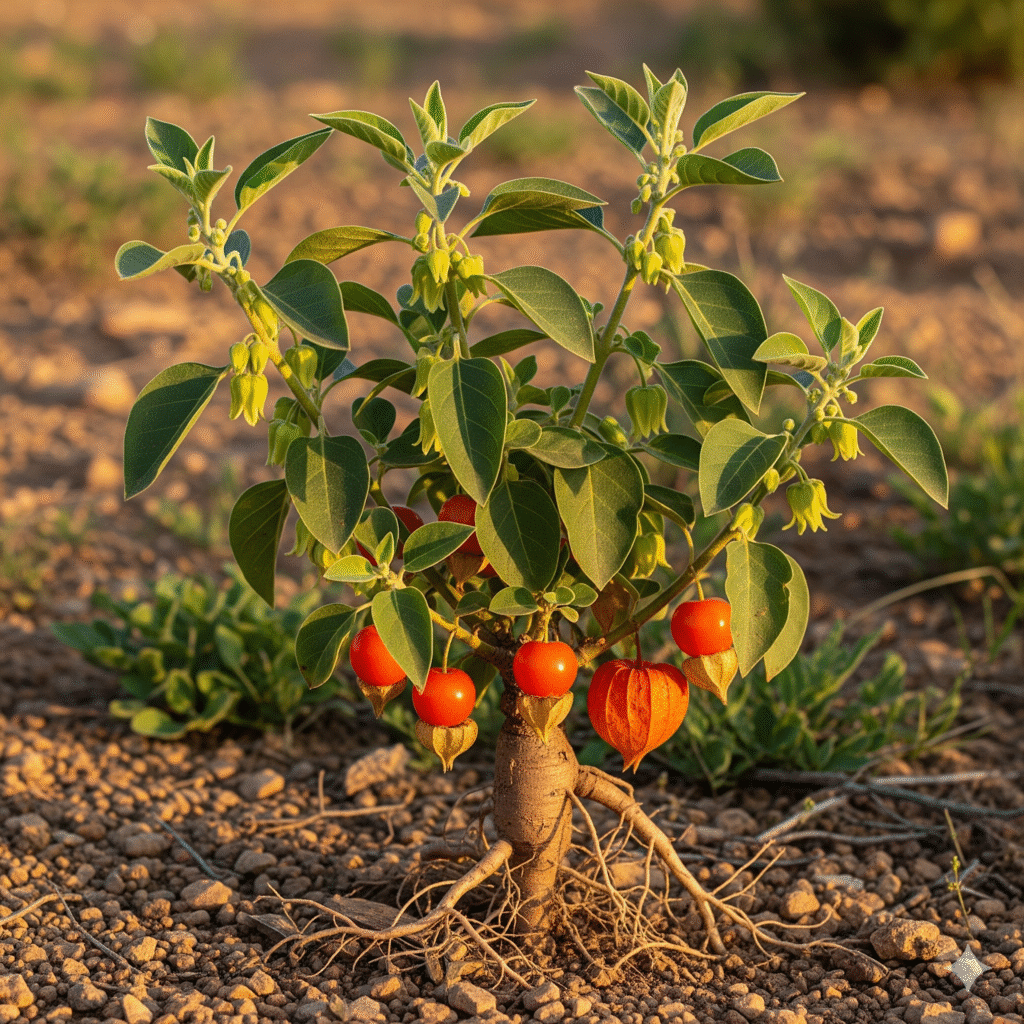
Why does it matter? Supporters say it’s more than just another herb—it’s been used as a go-to for stress, energy, and even long-term wellness. Some even point to its role in lowering certain health risks, though the strongest evidence so far lies in its calming and restorative effects.
Here’s the bigger picture: ashwagandha is a cornerstone of Ayurvedic medicine—India’s traditional healing system. Think of Ayurveda as the original “whole health” approach, blending diet, movement, mindfulness, and plant remedies to restore balance—not just in your body and mind, but in the way you connect with your environment too.
As mentioned above, Ashwagandha for anxiety and stress has been gaining popularity lately. It’s not sedating—it’s recalibrating. Even better, ashwagandha benefits for anxiety and sleep include improved rest after about eight weeks of consistent use.
Back in 2024, researchers put ashwagandha to the test with 60 participants, giving them daily doses of 60 to 120 milligrams for two months. The outcome? Pretty striking. Anxiety scores on clinical rating scales dropped by 59%, while perceived stress levels fell by as much as 62%.
But it wasn’t just “I feel better” talk—the lab work backed it up. Cortisol, the body’s main stress hormone, dipped by about 66%. Translation? Ashwagandha didn’t just mask stress; it helped recalibrate the body’s stress response at a chemical level.
L-Theanine’s Gentle Wave
Remember how a warm cup of tea can instantly take the edge off after a long day? That calm is partly thanks to L-Theanine, an amino acid found in green tea. Research shows that L-Theanine supplements can elevate GABA, dopamine, and serotonin—your brain’s “feel good” messengers—helping to promote relaxation and lower anxiety without any intoxicating effects. No fog, no high—just balance.
In fact, a 2019 randomized trial found that adults who took L-Theanine for stress and sleep over four weeks saw a noticeable drop in stress-related symptoms. While the numbers are promising, it’s worth remembering that stress looks different for everyone, and so does the way we respond to these kinds of stress relief supplements.
PEA’s Emerging Edge
CBD gets most of the spotlight, but it’s not the only player in town. Meet Palmitoylethanolamide (PEA)—your body actually makes it naturally. Think of it as CBD’s quieter twin: it works through a different pathway (activating PPAR-α instead of CB1/CB2), yet it delivers similar benefits—calming inflammation, protecting the brain, and even supporting sleep—without the legal gray zones or dosing confusion that often come with CBD.
When we look at Palmitoylethanolamide vs cannabidiol, both shine in reducing stress and easing discomfort, but PEA stands out for its safety and tolerability. Unlike CBD, which still faces regulatory hurdles, PEA has a cleaner track record and fewer unknowns. Early studies suggest it may help with gut health, chronic pain, and even better sleep—making it a solid candidate for anyone seeking CBD alternatives for sleep or stress relief.
So, are there any supplements better than CBD for anxiety? For some, PEA may just be the answer. It won’t deliver a buzz, but it can help restore balance where stress takes its toll. Pair it with tracking tools like Grounded to see how your stress and sleep patterns shift in real time.
Natural sleep aids: Melatonin, Magnesium, and More
How to improve sleep naturally without THC? Forget the haze—lean on roots and minerals that sync with your body clock.
- Melatonin supplement sleep: Resets circadian rhythm, especially useful for jet lag or shift work. Stick to 1–3mg. Downsides? Vivid dreams or mild grogginess if overdone.
- Magnesium supplements: Calm nerves, relax muscles. One study showed 300mg improved insomnia symptoms by 20%. Watch for loose stools if you push the dose.
So, are natural sleep aids as effective as prescription drugs? For mild to moderate insomnia, yes—they often work gently without dependency risks. Prescription meds pack more punch but carry long-term risks.
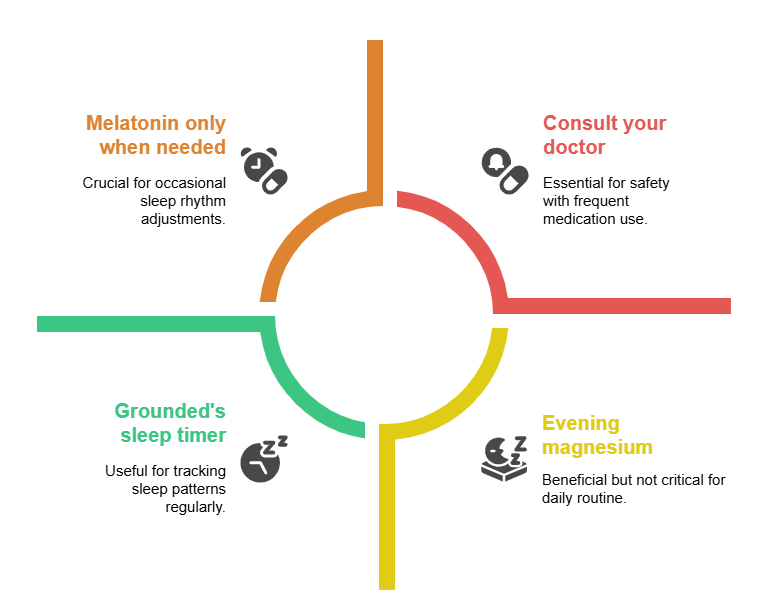
Routine to try:
Are there any side effects of non-psychoactive sleep aids?
Worried about the fine print? Are there any side effects of non-psychoactive sleep aids? Most are mild, but knowing them upfront is your shield.
- Melatonin side effects and sleep improvement: Rare, but may include grogginess, vivid dreams, or headaches at higher doses.
- Magnesium: Usually safe, but too much can cause stomach upset or diarrhea.
So, if you are wondering, “How can I choose the safest non-intoxicating supplement for stress?” Look for third-party tested products, start low, and give your body time to adjust. Adaptogens are long-game players—steady benefits without a crash.
- Again, always check with your doctor if you’re on medications.
- Track how your body responds with Grounded’s logs.
FAQs
Q: What are effective non-intoxicating alternatives to CBD for stress?
A: Adaptogens like ashwagandha and L-theanine ease anxiety without intoxication. Grounded helps track progress.
Q: Can natural supplements help improve sleep without THC or CBD?
A: Yes. Magnesium supplements relax nerves, and melatonin resets sleep cycles—proven, gentler than prescriptions.
Q: What are the best herbal adaptogens for stress and sleep?
A: Ashwagandha, L-Theanine, rhodiola, and holy basil—backed by studies showing 20%+ anxiety reductions.
Q: How do L-theanine and magnesium aid in stress reduction and sleep?
A: L-theanine boosts alpha waves for relaxation; magnesium calms the body for better rest.
Q: Are there any side effects of non-psychoactive sleep aids?
A: Rare. Low-dose melatonin may cause grogginess; magnesium can upset digestion.
Q: How does palmitoylethanolamide (PEA) compare to CBD?
A: PEA modulates like CBD but with a safer, emerging profile. A promising addition.
Your Calm Awaits—Non-Intoxicating Paths to Peace
So, can stress relief supplements help anxiety as well as sleep? Absolutely. Why choose non-intoxicating supplements for stress? Because they offer steady, sustainable relief without the haze.
From ashwagandha’s cortisol-balancing act to L-theanine’s calm focus, these tools are proof that adaptogens help with sleep and relaxation in real, measurable ways.
You’re wired for rest. Sometimes it just needs a nudge.
Ready to explore? Download Grounded at grounded420.com. Log stress dips, track sleep gains, and reclaim your ease. Your serene nights start here.
References
- https://ods.od.nih.gov/factsheets/Ashwagandha-HealthProfessional
- https://www.forbes.com/health/supplements/ashwagandha-benefits/#footnote_2
- https://pmc.ncbi.nlm.nih.gov/articles/PMC6836118/
- https://consensus.app/questions/palmitoylethanolamide-vs-cannabidiol/
- https://pmc.ncbi.nlm.nih.gov/articles/PMC3703169/
0 Comments