
You answer emails faster than your coworkers. You hit deadlines. You show up. By all outward signs, you look fine—maybe even high-performing. You’ve reached a point where your weed tolerance is so high that the typical “stoner” stereotypes simply don’t apply to you.
So if you’re feeling normal while high… are you actually unaffected?
Psychomotor Adaptation vs Cognitive Load — The Science Most Users Miss
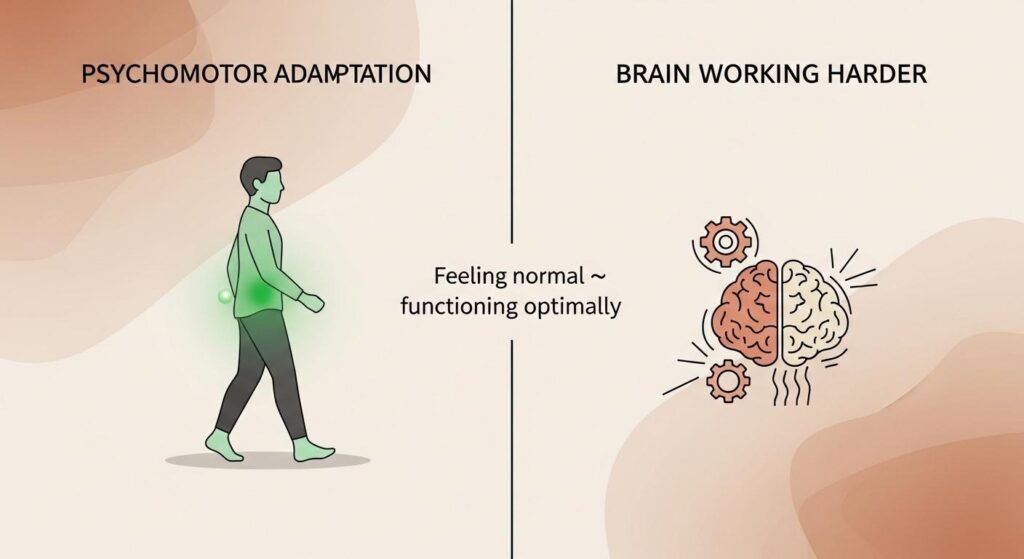
There is a difference between muscle memory and brain power.
Researchers often describe psychomotor adaptation in cannabis users as the brain’s ability to compensate for repeated intoxication during physical or routine tasks.
If you use cannabis often, your body gets “used to it” in a way that can be very misleading. Here is the simple breakdown of what is actually happening:
- Psychomotor Adaptation: Your Body “Learns” to Act Sober
When you use cannabis frequently, your body gets good at doing basic things while high. Walking, typing, and moving around start to feel normal and smooth again. This is called psychomotor adaptation. Your “autopilot” has learned how to work around the fog.
- The Cognitive Load That Doesn’t Go Away
Now for the part no one wants to hear.
While your body adapts, the brain’s executive center keeps struggling. Persistent cognitive load, high on weed, affects the prefrontal cortex — responsible for planning, memory, and attention.
Common deficits seen in cognitive deficits high tolerance users include:
- Slower processing speed
- Reduced learning capacity
- Increased mental fatigue
This creates what some describe as hidden cognitive load high-functioning weed-smoker patterns — your brain burns more energy just to maintain baseline performance.
Studies measuring event-related potentials in cannabis tolerance consistently show delayed neural processing during cognitive tasks.
You feel efficient.
Your brain is compensating.
Micro-reflection:
You may still finish the task… just with more mental effort than your brain should be spending.
Action step:
For one week, notice how often you re-read emails, forget why you entered a room, or struggle to track complex conversations while high versus sober. Write it down.
Data cuts through denial.
Real-World Risks: When “Feeling Normal” Isn’t Enough
Driving, Safety, and the Myth of “I’m Fine”
One of the most searched questions today is: Can you drive safely with cannabis tolerance?
Research is consistent — why tolerance doesn’t make you safe to drive high comes down to one fact: driving requires both cognitive and physical precision.
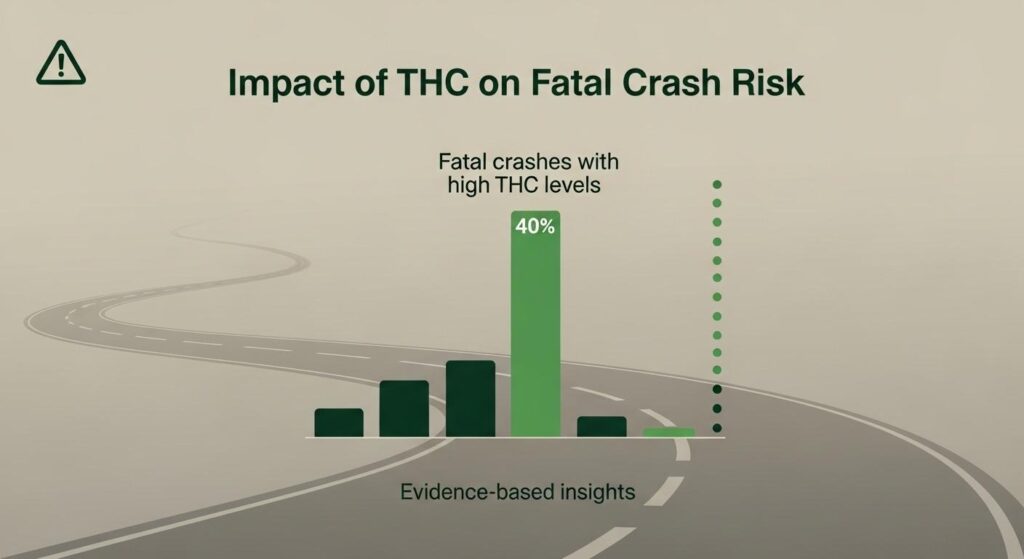
A startling October 2025 report from the American College of Surgeons reveals that nearly half of motorists killed in car accidents tested positive for high levels of THC. With over 40% of victims significantly exceeding legal limits, the data suggests cannabis-impaired driving is surging alongside legalization—proving that “legal” does not mean “safe” behind the wheel.
Even when motor skills improve, divided attention impairment weed slows hazard detection. Combined with cognitive load high on weed, emergency responses lag.
This reinforces the myth that feeling normal means no weed effects.
If you’re driving high, you’re not just risking a ticket — you’re risking lives.
Period.
Workplace Performance and Professional Growth
Back to that high functioning cannabis user identity.
At work, impairment rarely looks dramatic. Instead, cannabis impairment at work shows up subtly:
- Missing nuance in meetings
- Slower learning curves
- Reduced initiative
- Working harder for the same results
Compare your performance during a sober stretch — even two weeks — with your usual baseline.
Most people are stunned by the gap.
So, is functional tolerance a myth for daily cannabis users?
Not entirely.
Physical adaptation happens.
Cognitive protection does not.
The real myth of being functional while high on cannabis is believing adequate performance equals optimal performance.
And it doesn’t.
The Reset: What Happens When You Quit
Everyone asks: how long does it take to reset cannabis tolerance?
Research suggests that CB1 receptor downregulation (desensitization) caused by chronic cannabis use is reversible through abstinence. Here is the typical timeline for tolerance to reset:
- Initial Receptor Sensitivity (Noticeable improvement): Within 2–3 days of abstinence, receptors begin to upregulate (become more sensitive).
- Major Receptor Recovery (Significant reset): Roughly 2–4 weeks of total abstinence is required for CB1 receptors to return to near-normal levels, especially for daily or heavy users.
- Cognitive & Physiological Rebound (Full Reset): For heavy, long-term users, noticeable improvements in cognitive functions (memory, attention) and physical sensitivity typically occur within 1–3 months.
Key Factors Affecting the Timeline:
- Usage Frequency: Daily users need closer to 4 weeks, while occasional users may see a reset in 3–7 days.
- Body Fat: THC is fat-soluble and stored in fat cells; people with higher body fat may take longer to fully clear THC and reset receptors.
- Potency: Higher THC intake requires a longer reset period.
Disclaimer: This is based on studies of receptor downregulation. Individual experiences may vary.
So, does tolerance reset brain changes from chronic use?
Largely, yes — though recovery varies by frequency and duration.
This isn’t just about lowering weed tolerance.
It’s about getting your brain back.
What Comes Back First
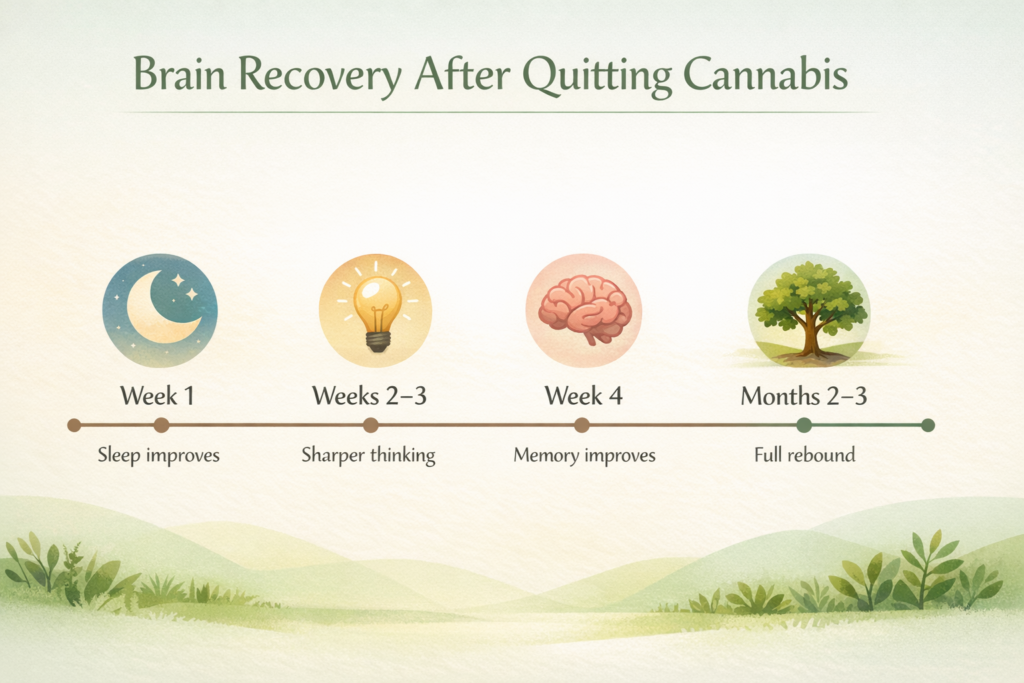
Recovery tends to follow a pattern:
- Week 1: Sleep improves, dreams return
- Weeks 2–3: Mental sharpness increases
- Week 4: Memory noticeably strengthens
- Months 2–3: Many users experience full cognitive rebound
Using a structured tracker like Grounded turns progress into proof — motivation you can actually see.
FAQ
Q. What is functional tolerance to cannabis?
A. It’s the body’s adaptation to repeated THC exposure through mechanisms like CB1 receptor downregulation cannabis and behavioral compensation. You feel sober—but your brain may still be cognitively taxed.
Q. Does feeling normal while high mean no impairment?
A. No. Feeling normal often masks deficits in attention, memory, and decision-making.
Q. Why can I function normally high on weed?
A. Because of behavioral tolerance marijuana, your body compensates physically while deeper cognitive strain remains.
Q. Is cannabis tolerance just behavioral adaptation?
A. Not entirely. While many ask, is cannabis tolerance just psychomotor adaptation, cognitive systems recover far more slowly.
Q. How does psychomotor adaptation differ from cognitive effects in tolerant users?
A. It’s easier to teach your body to walk straight and move correctly (motor skills) than it is for your brain to keep up with memory and complex thoughts (cognitive skills). You learn to act coordinated, but your brain is still taxed.
Q. Can you drive safely if tolerant to cannabis?
A. No. Tolerance makes you feel less high, but it doesn’t make your reaction times faster or your attention better. You are still impaired, even if you don’t feel “stoned.”
Q. What are signs of cannabis tolerance buildup?
A. You need much more to get the same feeling, the high feels muted or dull, and you feel surprisingly “normal” or sober even after smoking a lot.
Q. What are risks of long-term cannabis tolerance?
A. Besides wasting money, you risk living life in a fog, missing out on opportunities, and operating below your actual mental potential because your brain is constantly compensating for the THC.
Conclusion: Your Brain on Truth
Functional tolerance cannabis is real, but it’s not a superpower. It’s a mask. The myth of functional tolerance is believing that “feeling normal” is the same as being your best. You aren’t imagining your ability to function—but you are likely underestimating your ability to thrive without it.
What if you could experience what “normal” actually feels like? Not adapted. Not compensating. Just clear. If you’re ready to find out, Grounded can help. Download Grounded at grounded420.com and discover who you are when myth that feeling normal means no weed effects is no longer holding you back.
0 Comments